
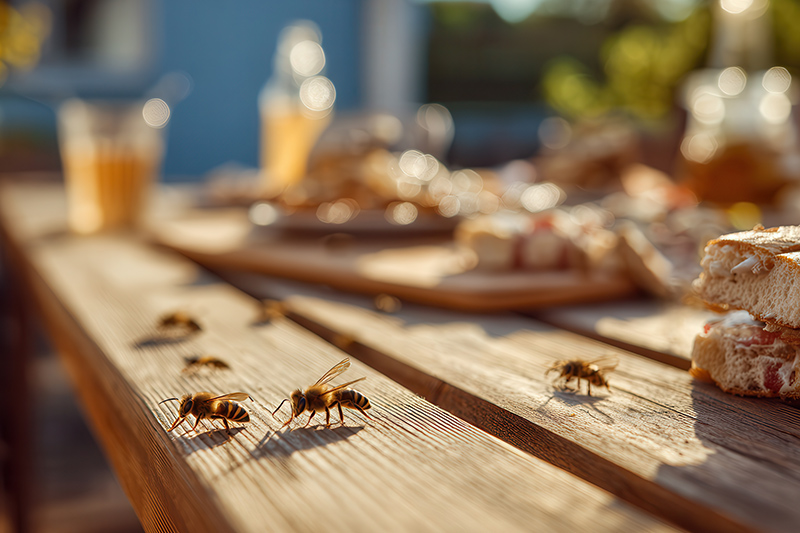
Hera are some simple bits of advice when dealing with wasps at home:
Keeping wasps away from Food and Drink
Here are five simple things people can do to help keep wasps away from food and drink:
- Keep food covered with lids, foil or reusable food covers when eating outdoors.
- Keep drinks covered or use bottles with caps to stop wasps getting inside.
- Clear away leftover food, crumbs and empty cans or bottles as soon as possible.
- Use a lidded bin for food waste and empty it regularly to reduce smells that attract wasps.
- Stay calm if a wasp comes near and avoid swatting at it, as sudden movements can make it more defensive.
What should I do if a wasp lands on me?
If a wasp lands on you, the best advice is to:
- Stay calm and avoid panicking.
- Keep as still as you can or move away slowly.
- Don’t swat, wave your arms or try to squash the wasp, as this can make it more likely to sting.
- Wait for the wasp to fly away on its own, or gently brush it off only if it is safe to do so.
Remaining calm and avoiding sudden movements reduces the chance of the wasp feeling threatened and stinging. If you are stung and have signs of a severe allergic reaction, such as difficulty breathing, swelling of the face or throat, or feeling faint, call 999 immediately.-
What should I do if a wasp stings me?
Most wasp stings can be treated at home by following these simple steps:
- Wash the sting with soap and water to help keep it clean.
- Apply a cold pack or ice wrapped in a cloth for up to 20 minutes to reduce pain and swelling.
- Take paracetamol or ibuprofen if needed to relieve pain, following the instructions on the packet.
- If the area is itchy, consider using an antihistamine tablet or a soothing cream recommended by a pharmacist.
- Avoid scratching the sting, as this can increase the risk of infection.
- Keep an eye on the sting. Mild redness, pain and swelling are common and should improve over a few days.
Seek urgent medical help by calling 999 if the person has difficulty breathing, swelling of the face, lips or throat, feels faint or collapses, or shows other signs of a severe allergic reaction (anaphylaxis).
Seek medical advice from NHS 111 or your GP if the swelling becomes very large, the pain or swelling gets worse after a few days, or there are signs of infection such as increasing redness, warmth, pus or a fever.