
Common Pest Problems During October and November
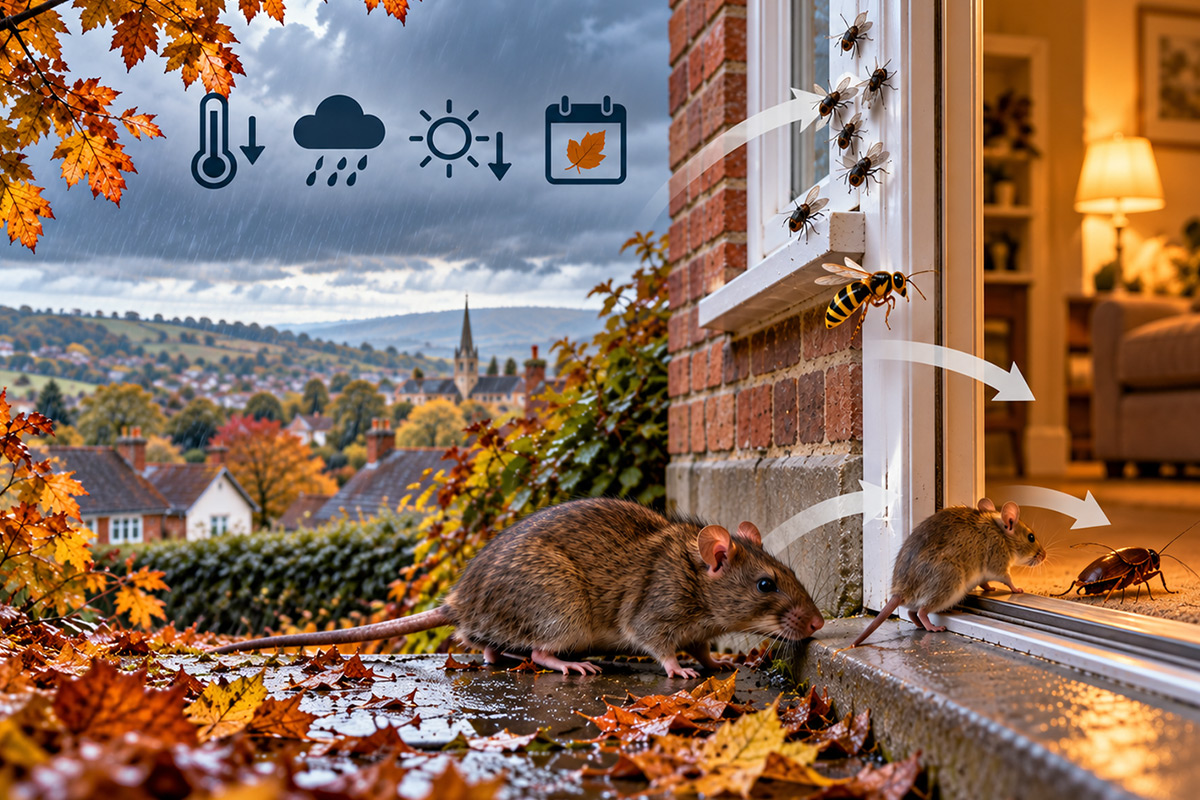
October and November mark an important seasonal change in southern England. As temperatures fall, daylight hours shorten and wetter weather becomes more frequent, many pests alter their behaviour. Some become less active outdoors, while others actively seek warm, dry and sheltered places in which to feed, nest or survive the winter. As a result, homes and businesses can experience increased problems with rodents, insects and other pests during autumn.
Rats and mice are among the most common pest problems at this time of year. During the warmer months, rodents can find plenty of food and shelter outdoors. However, falling temperatures and worsening weather encourage them to move into buildings. Mice can enter through surprisingly small gaps around doors, pipes, vents and damaged brickwork, while rats may gain access through drains, broken air bricks and structural defects. Once inside, they may contaminate food, damage stored products and gnaw electrical cables, timber and insulation. Properties near gardens, farmland, food businesses and waste-storage areas can be particularly attractive.
Cluster flies can also become noticeable during October and November. Unlike houseflies, cluster flies are not generally attracted to rotting food inside a property. Instead, adult flies seek protected locations in which to overwinter. Large numbers can gather in roof spaces, lofts, window frames and wall cavities, particularly in buildings that provide warm and undisturbed shelter. On sunny autumn days, they may become active around windows as temperatures temporarily rise.
Wasps can remain a problem during early autumn. Established colonies reach their largest size towards the end of summer, and worker wasps may continue searching for sugary foods as their natural food sources decline. This can bring them into contact with people around bins, kitchens, outdoor eating areas and food businesses. Activity usually falls significantly as colder weather arrives, although newly produced queens survive the winter in sheltered locations before establishing new colonies the following spring.
Cockroaches are less dependent on outdoor temperatures once they have established themselves inside heated buildings. Restaurants, commercial kitchens, blocks of flats, hospitals and other continuously heated premises can provide the warmth, moisture and food they require throughout autumn and winter. Infestations can be difficult to control because cockroaches hide in cracks, behind equipment and around warm service areas.
Stored-product insects, including various beetles and moths, may also be discovered during autumn. Heated homes and commercial premises allow these pests to remain active in products such as flour, cereals, nuts, dried foods and animal feed. Problems often become apparent when stored goods are disturbed or cupboards are cleaned.
Finally, fleas and bed bugs can remain active throughout October and November because modern buildings provide stable indoor temperatures. Central heating means that cold outdoor weather does not necessarily interrupt their development.
Overall, autumn pest problems in southern England are largely driven by falling temperatures, increased rainfall, reduced natural food supplies and pests searching for protected overwintering sites. Buildings offer exactly what many species need: warmth, shelter, food and water. Good proofing, careful waste management, hygiene and early identification therefore become particularly important as winter approaches.